
Why Is My Dog Chewing Everything?
Causes & How to Stop It
Dog Behaviour Guide · 7 min read
Last updated: October 2026
Chewing is normal dog behaviour. It keeps jaws strong, cleans teeth, and helps dogs relax. The problem starts when the target is your shoes, sofa, or door frame instead of a chew toy. Puppies chew because they’re teething and exploring (see our puppy biting guide), but when an adult dog is still destroying things, there’s usually a reason behind it. Find the reason, and the chewing becomes much easier to fix.
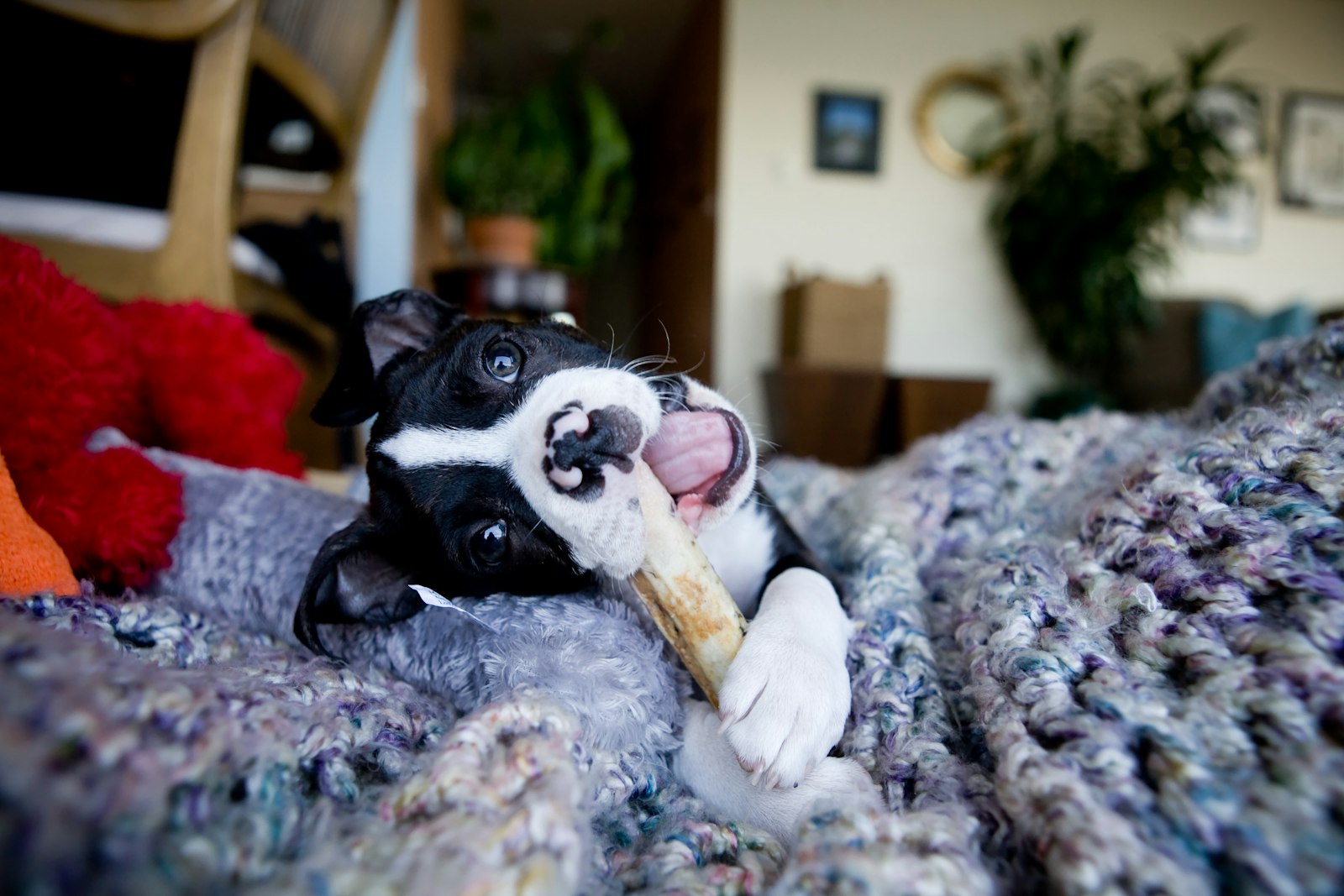
Common Reasons Adult Dogs Chew
- Boredom and under-stimulation. The most common cause. A dog without enough physical or mental exercise will invent its own entertainment.
- Separation-related stress. If the damage happens only when you’re out, often near doors or windows, anxiety about being alone may be the cause.
- Never learned what’s okay to chew. Rescue dogs and dogs that skipped puppy training may simply not know the house rules.
- Hunger or food-seeking. Dogs on restricted diets, or who smell food on items like bins and lunch bags, may chew to get at it.
- Medical issues. Dental pain, nausea, gastrointestinal problems, or nutritional issues can all change chewing habits. Sudden new chewing in an older dog is worth a vet visit.
Step 1: Work Out the Pattern
Before you change anything, spend a few days noticing when, where, and what your dog chews. Damage that happens only when you’re away points toward separation stress. Chewing in the evening after a quiet day points toward boredom. Chewing that targets food-scented items points toward food-seeking. If you can, record your dog while you’re out; a cheap camera can tell you a lot.
Step 2: Meet Your Dog's Needs
Most destructive chewing shrinks dramatically once a dog is properly tired and occupied:
- Daily exercise suited to your dog’s age, breed, and health. Many young, active dogs need much more than a short walk.
- Mental work such as sniffing games, short training sessions, and puzzle feeders. Ten minutes of brain work can tire a dog as much as a long walk.
- Feed from a food puzzle instead of a bowl, so mealtimes double as enrichment.
- A long-lasting chew before you leave the house, so your dog’s chewing urge has a healthy outlet when you go.
Step 3: Offer Better Things to Chew
Give your dog a few appealing, safe chew options and rotate them every few days to keep them interesting. Different dogs prefer different textures: firm rubber, rope, or edible chews sized correctly for your dog. Avoid toys that look like forbidden items, such as old shoes, because dogs can’t tell the difference between an old shoe and a new one.
Choose chews that are appropriate for your dog’s size and chewing strength, supervise new chews, and check with your vet before giving very hard items like bones or antlers, which can crack teeth.
Step 4: Manage the Environment
While you’re working on the cause, make mistakes hard to make. Put shoes, remote controls, and children’s toys away. Secure bins. Close doors to rooms your dog doesn’t need. When you can’t supervise, use a crate your dog is comfortable in, a playpen, or a dog-proofed room with safe chews available. Bitter-tasting deterrent sprays can help protect furniture, but they work best alongside the steps above, not instead of them.
Step 5: Redirect, Don't Punish
If you catch your dog chewing something off-limits, calmly interrupt and swap it for an approved chew, then praise them when they take it. Never punish after the fact. Your dog won’t connect a telling-off with damage done earlier, and fear can make chewing worse, especially if anxiety is part of the cause.
When Chewing Becomes an Emergency
Call your vet or an emergency clinic right away if your dog may have swallowed something dangerous: batteries, medications, cleaning products, socks or other fabric, string, small toys, corn cobs, cooked bones, or anything toxic. Warning signs of a blockage include repeated vomiting, not eating, a painful or swollen belly, and straining without passing stool. Don’t wait to see if it passes.
Keep Those Jaws Busy
Durable chew toys and treat-dispensing puzzles give your dog a satisfying outlet for chewing. See our hand-picked dog essentials.
Frequently Asked Questions
Why does my dog only chew things when I leave?
It may be boredom, but chewing around exits combined with barking, pacing, or drooling when alone often points to separation-related stress. Our separation anxiety guide explains how to tell the difference and what to do.
At what age do dogs stop chewing everything?
Teething usually finishes around six to seven months, but many dogs go through a second chewing phase as adolescents, often up to around one to two years old. With good outlets, most dogs settle as they mature, though many enjoy chewing for life.
Do bitter sprays work?
They can help protect specific items, but some dogs don’t mind the taste, and sprays don’t address why your dog is chewing. Use them as a backup to exercise, enrichment, and good chew options.
My senior dog has suddenly started chewing. Why?
A sudden change in an older dog should be checked by a vet. Dental pain, digestive upset, and age-related confusion can all cause new chewing. Our Dog Health & Wellness guide covers other warning signs.
Destructive chewing is a symptom, not a personality flaw. Figure out the pattern, give your dog more exercise and enrichment, offer great chew options, and manage the house while new habits form. If your dog is also hard to handle on walks, our leash pulling guide is a good next read.