
How to Stop Your Dog
Pulling on the Leash
Dog Training Guide · 6 min read
Last updated: October 2026
A dog that drags you down the street turns a pleasant walk into a workout for your shoulder. Leash pulling is one of the most common complaints dog owners have, and it’s also one of the most fixable. Dogs pull because it works: every step forward while the leash is tight teaches them that pulling gets them where they want to go. The fix is to make sure pulling stops working and walking nicely does.
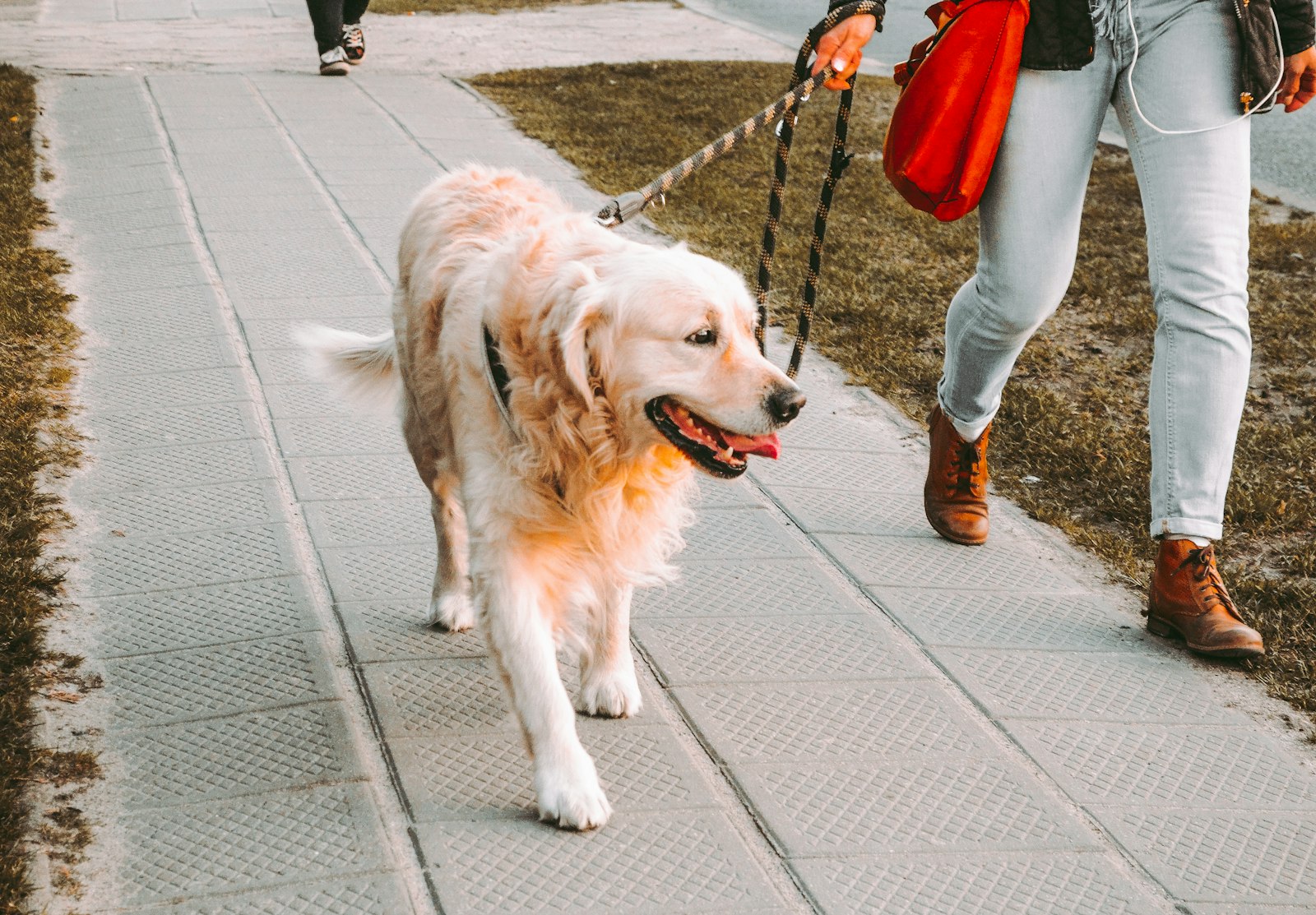
Why Dogs Pull
- Dogs walk faster than we do. A normal human pace is slow for most dogs.
- The world is exciting. Smells, other dogs, and people all pull your dog’s attention forward.
- Pulling gets rewarded. If the walk keeps moving when the leash is tight, your dog learns that a tight leash is normal.
- Opposition reflex. Many dogs instinctively lean into pressure, so pulling back on the leash can make them pull harder.
- Pent-up energy. A dog that hasn’t had enough exercise or mental stimulation will be harder to walk calmly.
Step 1: Practise Indoors First
Start where there are no distractions. Clip on the leash in your living room or garden, hold some small treats, and walk a few steps. Every time your dog is beside you with a loose leash, mark it with a word like “yes” and give a treat right next to your leg. That spot by your side becomes the best place to be.
Keep sessions short, around five minutes, and do a couple a day. Once your dog is reliably sticking near you indoors, move to a quiet street.
Step 2: Stop When the Leash Gets Tight
This is the core of the method. The moment the leash goes tight, stop walking and stand still like a tree. Don’t yank or pull back. Wait for your dog to ease off, look back at you, or take a step toward you so the leash slackens. As soon as it does, mark it, reward, and start walking again.
At first you may only manage a few steps at a time. That’s normal. Your dog is learning that a loose leash makes the walk happen and a tight one makes it stop.
Step 3: Change Direction
If your dog keeps charging ahead, calmly turn and walk the other way. When your dog catches up to your side, reward them. Repeat as needed. This teaches your dog to keep an eye on where you’re going rather than leading the way, and it’s especially useful when stopping alone isn’t enough.
Step 4: Reward Generously, Then Fade
In the early weeks, reward often: every few steps of loose-leash walking earns a treat. As your dog improves, gradually space the rewards out. You can also use real-life rewards, like letting your dog go sniff a lamppost as a prize for walking nicely. Sniffing is a big part of what walks mean to a dog, so it makes a powerful reward.
The Right Equipment
Equipment won’t train your dog for you, but it can make walks safer and easier while you train:
- Front-clip harness: the leash attaches at the chest, so pulling turns your dog sideways instead of propelling them forward. A good option for strong pullers.
- Standard flat collar or back-clip harness: fine for dogs that pull only a little.
- A fixed-length leash of around 1.2 to 1.8 metres (4 to 6 feet). Avoid retractable leashes while training; they teach your dog that pulling extends their range.
Avoid choke chains, prong collars, and other tools that work through pain or pressure on the neck. They can injure your dog’s throat and often increase fear or reactivity.
Common Mistakes
- Sometimes letting pulling work. If you’re in a hurry and let your dog drag you along, you undo the lesson. On rushed days, use a front-clip harness and keep walks short.
- Jerking the leash. It doesn’t teach your dog what to do and can hurt them.
- Training in hard places too soon. A busy park is the final exam, not the first lesson.
- Skipping exercise. A quick game of fetch in the garden before a walk can take the edge off an energetic dog.
Gear That Helps While You Train
A well-fitted front-clip harness and a simple fixed-length leash make loose-leash training much easier. See our hand-picked dog essentials.
Frequently Asked Questions
How long does it take to stop leash pulling?
Most dogs show clear improvement within two to four weeks of consistent daily practice. Reliable loose-leash walking around heavy distractions can take a few months, especially for young, strong, or excitable dogs.
Can an older dog learn to stop pulling?
Yes. Adult and senior dogs can learn loose-leash walking with the same methods. It may take a little longer to undo a long-standing habit, but consistency works at any age.
My dog lunges at other dogs. Is that the same problem?
Not quite. Lunging, barking, or growling at other dogs or people is usually reactivity, often driven by fear or frustration. It needs a different approach based on distance and gradual exposure. A certified trainer or veterinary behaviourist can help.
Should my dog walk exactly at my side?
For everyday walks, a loose leash is the goal, not a strict heel. It’s fine for your dog to walk a little ahead, to one side, or to stop and sniff, as long as the leash stays slack.
Loose-leash walking comes down to one rule your dog can understand: a tight leash stops the walk, a loose leash keeps it going. Be patient, reward often, and practise in easy places before hard ones. If your dog also greets people by leaping up at them, our guide to stopping jumping is a good next read.