
How to Stop a Puppy From Biting:
A Week-by-Week Plan
Dog Training Guide · 7 min read
Last updated: October 2026
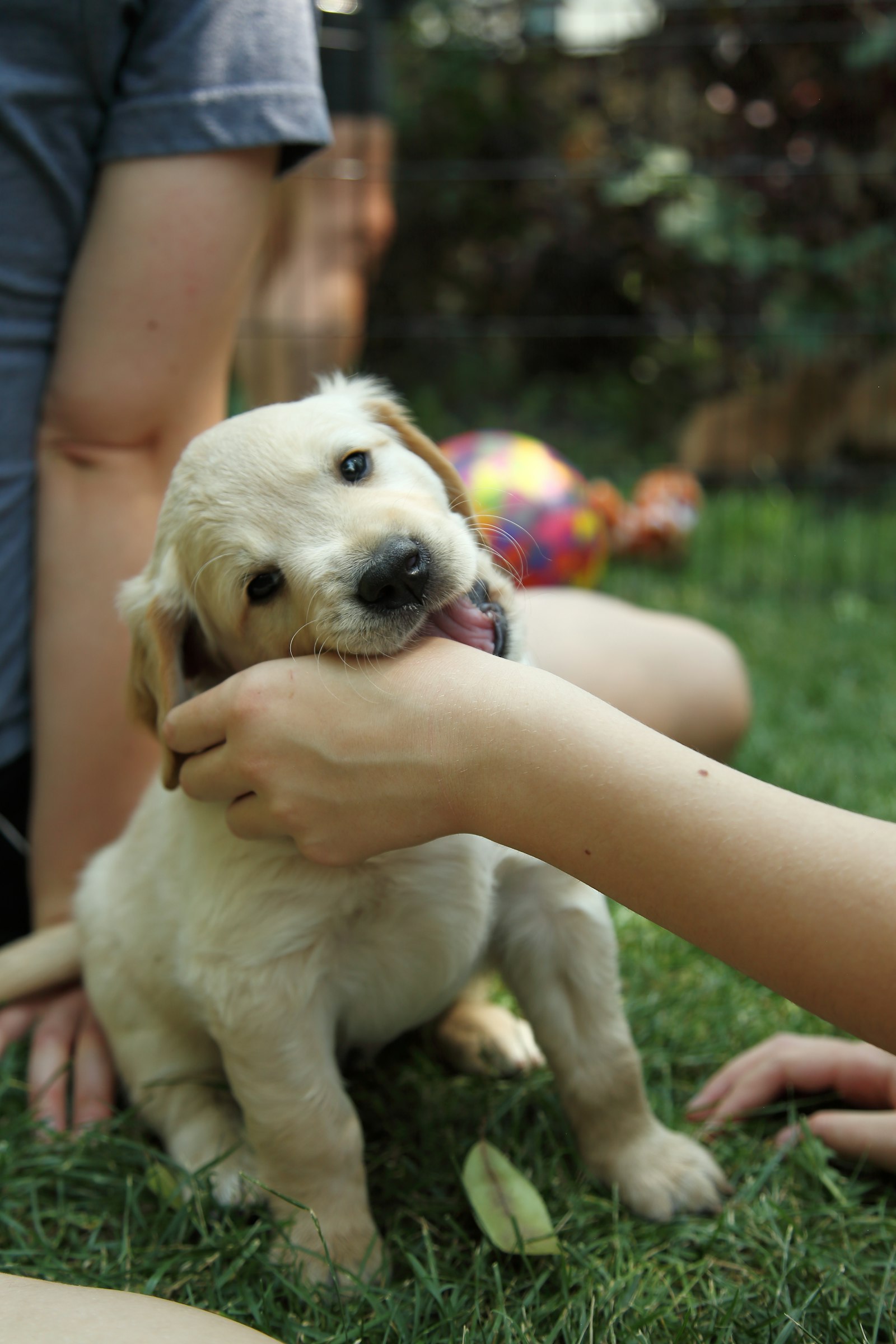
Puppy biting is normal. Puppies explore the world with their mouths, and almost all of them nip hands, sleeves, and ankles in the first few months. The good news: with consistent, gentle training, most puppies learn that human skin is off-limits and toys are the better choice. The goal isn’t to stop all mouthing overnight. It’s to teach your puppy to be gentle first, then to redirect that energy somewhere appropriate. The four-week plan below breaks that into small, manageable steps.
Why Puppies Bite
Understanding the reason behind the nipping makes it much easier to fix. Most puppy biting comes from one of these:
- Exploration: a puppy’s mouth works like our hands. Chewing is how they learn what things are.
- Teething: puppies lose their baby teeth and grow adult teeth over the first several months, and sore gums make chewing feel good.
- Play: littermates play by wrestling and mouthing each other. Your puppy is inviting you to play the same way.
- Overtiredness: puppies need a lot of sleep. An overtired puppy often gets more bitey, not less, much like a cranky toddler.
- Learned behaviour: if biting gets a reaction (squealing, running, a chase game), your puppy learns that biting starts the fun.
Normal Play Biting vs. a Real Problem
Normal play biting comes with a loose, wiggly body, a play bow, and bouncy movement. It may be hard enough to hurt (puppy teeth are sharp), but the puppy is relaxed and having fun.
Signs to take more seriously include a stiff or frozen body, a hard stare, growling paired with stillness, biting when you approach food or toys, or biting when being touched in a particular spot. These can point to fear, resource guarding, or pain. If you see them, talk to your vet first, then a certified trainer or veterinary behaviourist, rather than relying on the plan below alone.
Week 1: Set Up Your Home for Success
The first week is about making the right choice easy and the wrong choice hard.
- Keep chew toys everywhere. Have a toy within reach in every room so you can offer one the moment teeth come out. Rotate a few different textures (soft rubber, rope, plush) to keep them interesting.
- Use management tools. A playpen, crate, or baby gate gives your puppy a safe space and gives you a break when things get too wild.
- Protect sleep. Puppies typically need most of the day asleep. Schedule regular naps in a quiet spot, especially after play sessions.
- Track the “bitey hours.” Many puppies get most mouthy at the same times each day, often in the evening. Plan a calm activity or nap before those windows.
Week 2: Teach Bite Inhibition
Bite inhibition means your puppy learns to control the pressure of its mouth. It’s one of the most valuable lessons a dog can learn, because a dog that has it is far less likely to cause injury if it ever bites out of fear or pain later in life.
How to teach it: play gently with your puppy. The moment teeth press hard on skin, stop. Go still and quiet, take your hands away, and turn away for 10 to 30 seconds. Then calmly resume play. Your puppy learns that hard bites end the game, while gentle play keeps it going.
If your puppy keeps biting during the pause, step out of the room or calmly place them in their pen for a minute. Keep it boring, not angry. Some people yelp “ouch” like a littermate would. It works for some puppies, but it gets others even more excited, so drop it if your puppy bites harder afterward.
Week 3: Teach Alternative Behaviours
Stopping a behaviour works best when you give your puppy something else to do instead. This week, practise a few short training sessions a day (3 to 5 minutes each) using small treats:
- Sit for attention: reward your puppy for sitting calmly instead of nipping to get your notice.
- Hand target (“touch”): teach your puppy to bump your palm with its nose. It gives hands a new, non-biting meaning.
- “Leave it” and “drop it”: useful for shoelaces, trouser legs, and anything else your puppy grabs.
- Tug with rules: tug is a great outlet if the game pauses the instant teeth touch skin, and restarts once your puppy lets go on cue.
Week 4: Build Consistency and Gentle Handling
By now, your puppy should be biting less often and more softly. Week four is about locking that in.
- Get everyone on the same page. If one person allows rough play and another doesn’t, progress stalls. Agree on the same rules and words for the whole household.
- Practise handling. Gently touch paws, ears, and the mouth for a second at a time, then give a treat. This prepares your puppy for grooming and vet visits, which are common biting triggers.
- Supervise children. Kids often run and squeal, which looks like a chase game to a puppy. Teach children to stand still “like a tree” if the puppy gets nippy, and always supervise their play.
- Keep exercise and mental work up. Short walks (as your vet advises for your puppy’s age), sniffing games, and food puzzles drain energy that would otherwise go into biting.
Common Mistakes That Make Biting Worse
- Using hands as toys. Wrestling or wiggling fingers in your puppy’s face teaches them that hands are for biting.
- Physical punishment. Hitting, holding the mouth shut, or pinning a puppy down can make them fearful and more likely to bite defensively. It can also damage your relationship.
- Pulling your hand away fast. A quick, jerky movement looks like prey and invites another grab. Go still instead.
- Inconsistency. Allowing biting sometimes and not others is confusing, and it actually makes the habit harder to break.
- Skipping naps. An overtired puppy can’t learn well. If biting suddenly gets worse, try a nap before anything else.
Helping a Teething Puppy
If chewing ramps up and you spot tiny teeth on the floor or a little blood on toys, your puppy is likely teething. Cold helps soothe sore gums: try a chilled rubber teething toy or a damp washcloth that has been twisted and frozen (always supervise). Choose chews made for puppies, and check with your vet before giving very hard items like bones or antlers, which can damage young teeth.
Give Those Teeth a Better Target
A treat-dispensing toy keeps a mouthy puppy busy and rewards chewing on the right things. See our hand-picked essentials for new puppy owners.
Frequently Asked Questions
At what age do puppies stop biting?
Most puppies bite much less once their adult teeth are in, usually somewhere around six to seven months old. How quickly it fades depends heavily on training: puppies taught bite inhibition early tend to grow out of it sooner and more completely.
Why does my puppy bite more in the evening?
Evening “zoomies” and biting are very common and are usually a sign of an overtired or overstimulated puppy. A calm chew session followed by a nap in a quiet spot often settles things faster than more play.
Is it okay to let my puppy mouth me gently?
Early on, gentle mouthing is part of how puppies learn bite inhibition, so it isn’t something to panic about. Over time, though, aim to redirect all mouthing to toys so your adult dog keeps its teeth off people entirely.
When should I get professional help?
Reach out to your vet or a certified trainer if biting breaks skin regularly, gets worse despite a few weeks of consistent training, or comes with growling, freezing, or guarding food and toys. Our Dog Health & Wellness guide covers the warning signs that mean a vet visit can’t wait.
Puppy biting can feel endless in the moment, but it’s a phase, and how you respond now shapes the adult dog you’ll live with. Stay calm, stay consistent, and give your puppy plenty of sleep and the right things to chew. Most owners see a clear difference within a few weeks. If your puppy is also struggling when left alone, our separation anxiety guide is a good next read.