
How to Stop Your Dog
Jumping on People
Dog Training Guide · 6 min read
Last updated: October 2026
A dog jumping up to say hello is usually just being friendly, but muddy paws on clothes, scratched arms, and knocked-over children are no fun. The good news is that jumping is a learned habit, and dogs can learn a better way to greet people. The secret is to stop rewarding the jump and start rewarding four paws on the floor.
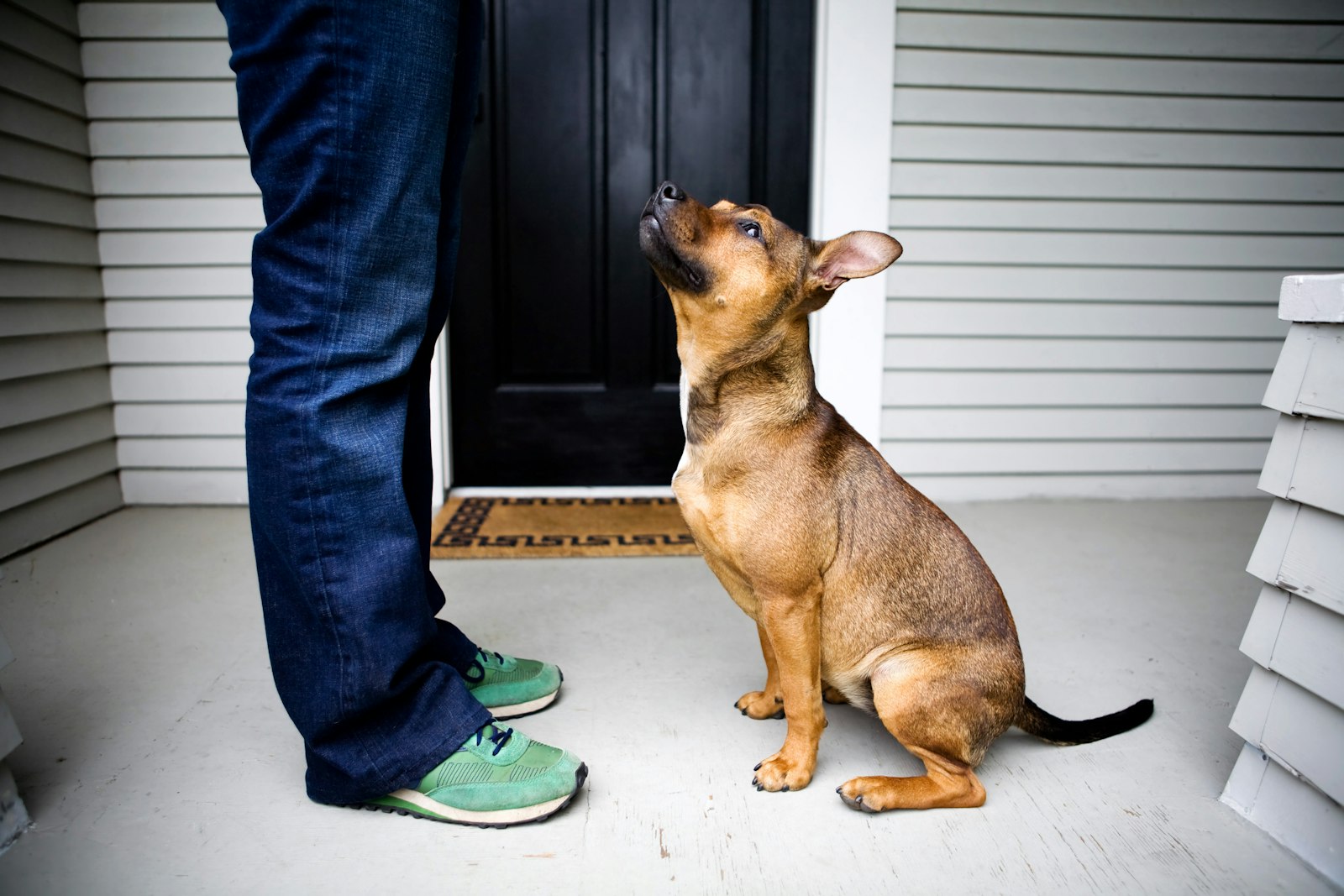
Why Dogs Jump Up
Dogs greet each other face to face, so jumping is a natural way to get closer to ours. Most dogs jump because it has worked in the past. When a puppy jumps, people tend to look at them, talk to them, push them away, or pet them. To a dog, all of that is attention, and attention is a reward. Excitement plays a big part too: the more worked up a dog gets when people arrive, the more likely they are to leap.
Step 1: Make Jumping Pointless
When your dog jumps, remove all attention. Turn your back, fold your arms, and stay quiet. Don’t push them down, shout, or knee them in the chest; even negative attention can keep the habit going. The instant all four paws are back on the ground, turn around and calmly reward with praise, a treat, or petting. If your dog jumps again, turn away again.
Your dog will soon notice a pattern: jumping makes you disappear, and standing nicely brings you back.
Step 2: Teach a Replacement Behaviour
It’s easier for a dog to stop doing something when they know what to do instead. A sit is the classic choice, because a dog can’t sit and jump at the same time. Practise sit in calm moments first, then ask for it as you come through the door, and reward generously when your dog’s bottom hits the floor.
For very bouncy dogs, a “go to your mat” or “fetch a toy” greeting can work even better, because it gives that excited energy somewhere to go.
Step 3: Keep Greetings Low-Key
Big, excited hellos wind dogs up. When you come home, walk in calmly and wait a minute or two for your dog to settle before greeting them. When you do say hello, crouch down to their level with your voice soft and your movements slow. Calm arrivals make calm dogs.
Step 4: Practise With Visitors
Visitors are the hardest test, so set your dog up to succeed:
- Use a leash when guests arrive, so you can keep your dog from reaching them while they learn.
- Brief your guests. Ask them to ignore your dog until all four paws are on the floor, then greet calmly.
- Stage practice runs. Have a friend ring the bell, come in, and leave several times in a row. Each repetition gets a little less exciting.
- Use a gate or another room for the first few minutes if your dog is too excited to think. Bring them out once they’ve calmed down.
Common Mistakes
- Mixed rules. If some family members let the dog jump on them and others don’t, the dog keeps trying. Everyone needs to follow the same rule.
- Allowing jumping “sometimes.” Inviting your dog up for cuddles on the sofa is fine on cue, but uninvited jumping should never pay off.
- Physical corrections. Kneeing, stepping on back feet, or pushing can hurt your dog and make them anxious around people.
- Too little exercise. A dog full of energy finds it much harder to stay calm at the door.
Give That Energy an Outlet
Puzzle feeders and treat-dispensing toys help burn off energy so your dog can stay calmer when visitors arrive. See our hand-picked dog essentials.
Frequently Asked Questions
Why does my dog only jump on certain people?
Usually because those people react the most, by laughing, talking, or petting. Dogs repeat whatever gets the biggest response. Ask those people to follow the turn-away rule too.
How long will it take my dog to stop?
Many dogs improve noticeably within a couple of weeks if everyone is consistent. Expect the jumping to get briefly worse at first, as your dog tries harder to make the old trick work. That’s a sign the new rule is sinking in.
Is it okay to let my dog jump up when I invite it?
Yes, as long as it only happens on a clear cue like “up” or “hug,” and jumping without the cue is never rewarded. Many dogs can learn the difference.
My dog jumps and nips. What should I do?
In puppies this is usually over-excited play, covered in our puppy biting guide. In an adult dog, or if the nips are hard or come with stiffness or growling, speak to your vet and a certified trainer or veterinary behaviourist.
Jumping stops when it stops working. Turn away from jumps, reward four paws on the floor, teach a sit for greetings, and get everyone in the household on board. If walks are a struggle too, our leash pulling guide is a good next read.