
How to Stop Your Cat
Scratching Furniture
Cat Behaviour Guide · 6 min read
Last updated: October 2026
If your sofa arm is shredded, you’re not alone. Scratching is one of the most common complaints cat owners have. But it isn’t bad behaviour; it’s a natural need. You can’t stop a cat from scratching, and you shouldn’t try. What you can do is teach your cat to scratch somewhere you’re happy with. With the right scratching posts in the right places, most cats switch over surprisingly quickly.
Why Cats Scratch
- Claw care. Scratching helps shed the worn outer layer of the claws.
- Marking territory. Cats have scent glands in their paws, and scratching leaves both a visible mark and a smell that says “this is mine.”
- Stretching. A good full-body scratch stretches the back, shoulders, and legs, especially after a nap.
- Emotional release. Cats often scratch when excited, frustrated, or greeting you.
That’s why cats so often pick sofas: they’re sturdy, tall enough for a full stretch, in a prominent spot, and right where the family spends time.
Step 1: Get the Right Scratching Post
Many cats ignore their scratching post simply because it’s the wrong kind. A good post is:
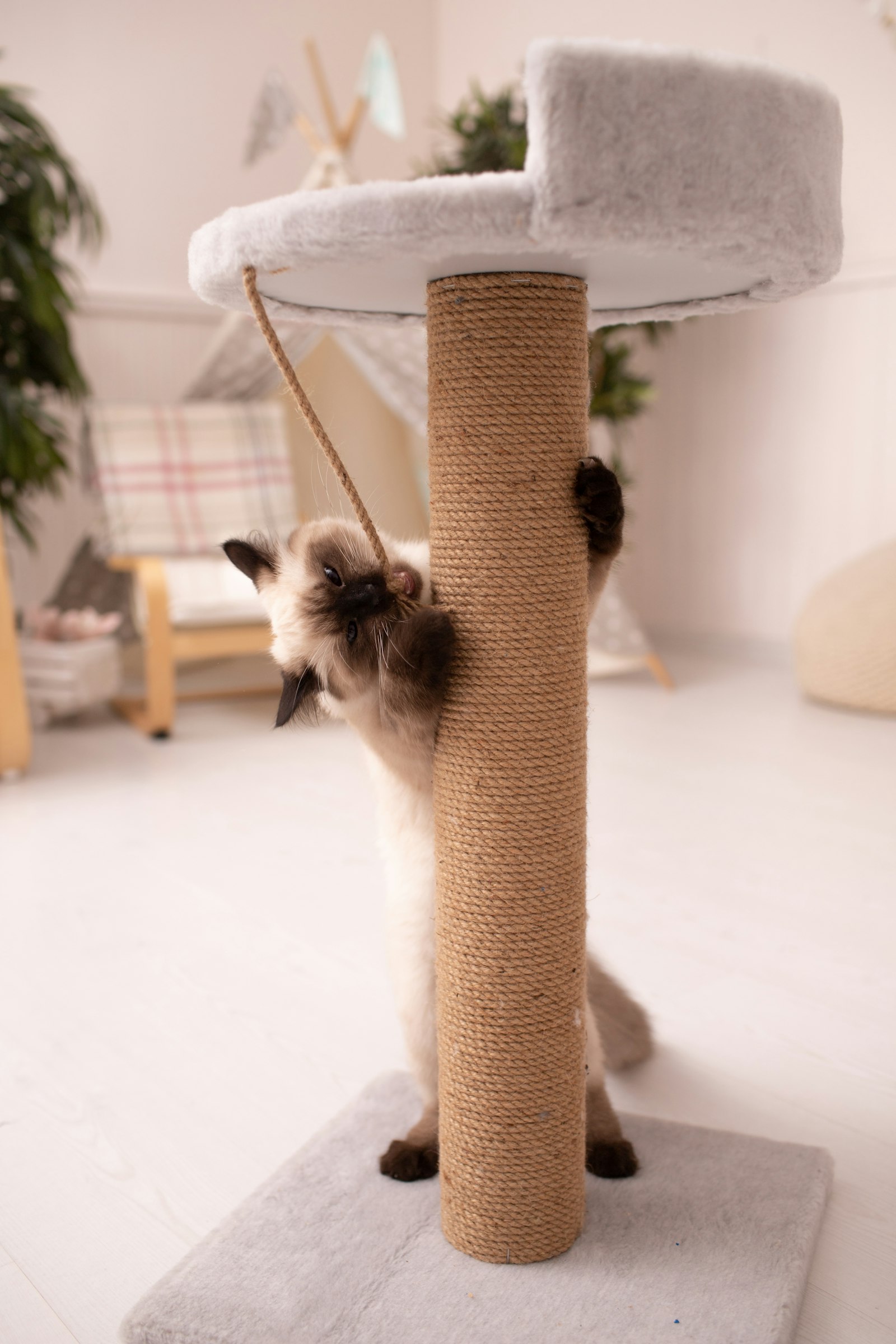
- Tall enough for your cat to stretch out fully, usually at least around 80 cm (about 30 inches).
- Heavy and stable. If it wobbles or tips, your cat won’t trust it.
- Covered in a satisfying texture. Sisal rope or sisal fabric is a favourite for many cats. Some prefer cardboard or bare wood.
- The right orientation. Some cats prefer vertical posts; others like horizontal or angled scratchers. Watch what your cat goes for: if it’s the side of the sofa, go vertical; if it’s the rug, try a flat scratcher.
Step 2: Put It in the Right Place
Location matters as much as the post itself. Place a scratcher right next to the piece of furniture your cat is targeting, ideally directly in front of the damaged spot. Add others near where your cat sleeps, since cats love to scratch after waking, and near entrances to the rooms you share. A single post hidden in a spare room won’t compete with the sofa.
Once your cat is reliably using a post, you can move it gradually, a little at a time, to a spot you prefer.
Step 3: Make the Post Irresistible
- Rub catnip or silvervine on the post, if your cat responds to it.
- Play near it. Drag a wand toy up and over the post so your cat’s claws catch the surface.
- Reward use. When your cat scratches the post, praise them calmly or offer a treat.
- Don’t force it. Placing your cat’s paws on the post and moving them can make your cat avoid it.
Step 4: Make the Furniture Less Appealing
While your cat learns, temporarily cover the favourite furniture spots so scratching there just isn’t satisfying. Double-sided sticky tape made for furniture, a fitted throw, or a sheet of smooth plastic all work well. Once your cat has switched to the post for a few weeks, you can remove the covers bit by bit.
If you catch your cat scratching furniture, gently interrupt with a soft sound and guide them to the post. Never shout, spray water, or punish; it makes cats anxious and can damage your bond without solving the problem.
Keep Claws Trimmed
Regular nail trims reduce the damage scratching can do. Trim just the sharp, clear tip, staying well away from the pink quick, which contains blood vessels and nerves. If you’re unsure, ask your vet or groomer to show you. Soft nail caps glued over the claws are another option some owners use temporarily; ask your vet whether they suit your cat.
Why Declawing Isn't the Answer
Declawing isn’t a nail trim. It’s surgical amputation of the last bone of each toe. It can cause long-term pain, changes in how a cat walks, litter box problems, and increased biting. Many veterinary organisations oppose it except in rare medical cases, and it is banned or restricted in a number of countries and regions. The steps above solve scratching problems for the vast majority of cats without surgery.
Give Those Claws a Better Target
A tall, sturdy sisal post can save your sofa. See our hand-picked cat essentials.
Frequently Asked Questions
Why does my cat ignore its scratching post?
Usually because it’s too short, too wobbly, the wrong texture or orientation, or in the wrong place. Compare it to what your cat chooses to scratch, then pick a post that matches and place it right next to that spot.
How many scratching posts do I need?
A good starting point is at least one per cat, plus one in each main room your cat spends time in. Multi-cat homes benefit from extra, so no cat has to compete for a favourite spot.
Can an older cat learn to use a scratching post?
Yes. Older cats can switch too, though it may take longer. Match the post to their current favourite surface, and make it very easy to reach. Older cats with stiff joints may prefer a lower, angled, or horizontal scratcher.
My cat has suddenly started scratching much more. Should I worry?
A sudden increase can be a sign of stress, such as a new pet, a house move, or a cat outside the window. If it comes with other changes like hiding or litter box problems, read our indoor cat enrichment guide and consider a vet check.
You won’t stop a cat scratching, but you can choose where it happens. A tall, sturdy post in the right spot, made more appealing with play and rewards, and furniture that’s temporarily less inviting, is all most cats need. If you’re bringing home a new kitten, our new kitten care guide helps you start good habits from day one.